Beyond BMI: Why the Scale is Lying to You About Your Health
Published on May 11, 2026 Updated
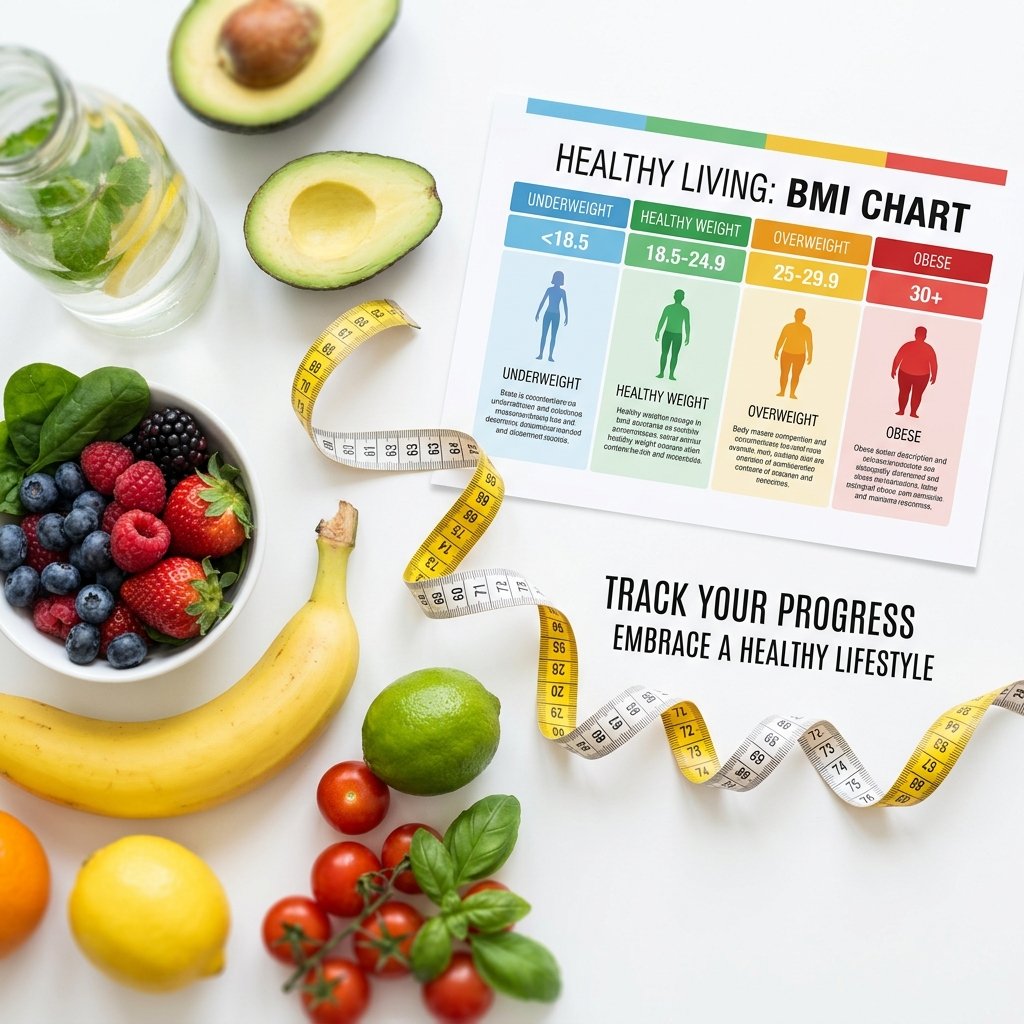
A few years ago, I went in for a standard corporate health checkup. I was in the best shape of my life. I was lifting weights four days a week, tracking my macros diligently, and I had visible abdominal definition. The nurse asked me to step on the scale, measured my height, and punched the numbers into her computer.
She printed out the report, looked at me with a concerned expression, and said, "Sir, your Body Mass Index (BMI) is 27.5. You are clinically classified as Overweight. You need to consider a low-fat diet."
I was stunned. I was wearing a fitted t-shirt, and I clearly did not have an ounce of excess fat on me. Yet, a medical professional was telling me I was on the verge of obesity. That was the day I realized that the BMI—the golden standard of global health tracking—is fundamentally, mathematically flawed.
The Origin of a Flawed Formula
To understand why the BMI is so inaccurate for individuals, you have to look at who invented it. The BMI was not created by a doctor, a nutritionist, or a physiologist. It was invented in the 1830s by a Belgian astronomer and mathematician named Adolphe Quetelet.
Quetelet wasn't trying to measure individual health; he was trying to figure out the statistical "average man" across large populations for government data. The formula is embarrassingly simple: your weight in kilograms divided by your height in meters squared (kg/m²). It completely ignores the single most important factor in human health: Body Composition.
Why Muscle Breaks the Scale
Here is the biological reality: muscle is significantly denser than fat. A kilogram of muscle takes up roughly 15% less space than a kilogram of fat. If you take two men who are both exactly 180cm tall and weigh exactly 90kg, they will both have the exact same BMI of 27.8 (Overweight).
However, Man A might be a dedicated powerlifter with 12% body fat, while Man B might be a sedentary office worker with 35% body fat. The BMI algorithm cannot differentiate between the two. It assumes all weight is equal. This is why nearly every professional athlete, rugby player, and bodybuilder on the planet is classified as "Obese" by the BMI scale.
Better Metrics for Real Health
If the BMI is broken, what should we use instead? I built the BMI & Health Tracking tools to include the baseline BMI (because insurance companies still annoyingly demand it), but I highly emphasize tracking these secondary metrics instead:
- Waist-to-Hip Ratio (WHR): This is incredibly important. Where you store fat matters more than how much you weigh. Visceral fat (the hard belly fat that surrounds your organs) is directly linked to heart disease and diabetes. By dividing your waist circumference by your hip circumference, you get a much better indicator of cardiovascular risk than the BMI.
- Body Fat Percentage: This requires calipers or a DEXA scan, but it is the ultimate truth. A man at 15% body fat is healthy, regardless of what the scale says. A man at 30% body fat is at risk, even if his BMI says he is "Normal Weight" (a condition known as "Skinny Fat").
- The Mirror and How Your Clothes Fit: It sounds unscientific, but it is the most practical metric. If your weight hasn't changed in a month, but your jeans are suddenly loose around the waist, you are losing fat and gaining dense muscle. The scale is lying; your clothes are telling the truth.
Final Thoughts
Do not let a 200-year-old mathematical formula dictate your self-worth. If you are actively lifting weights and eating protein, your BMI will likely creep into the "Overweight" category simply because you are carrying dense, metabolically active muscle tissue. Use the BMI as a very rough starting point, but trust the tape measure, your body fat percentage, and your energy levels to tell you the real story of your health.

Written by Rishav
Founder & Lead Developer
Rishav is an independent software developer and financial enthusiast based in India. He built CalculiX Pro to combat the cluttered, ad-heavy landscape of utility websites and provide users with privacy-first, instant mathematical answers. When not coding, he writes about personal finance, algorithmic logic, and web architecture.
Read more about the mission